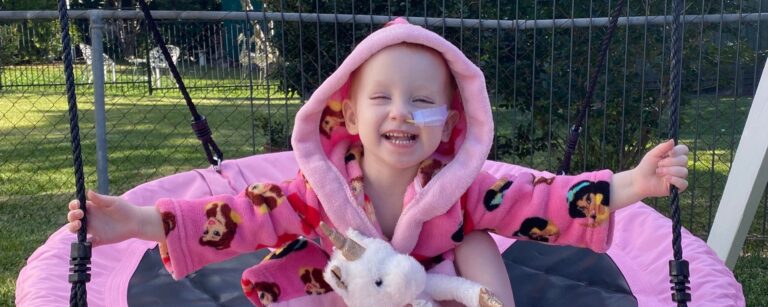
Concerned about her toddler’s persistent vomiting, Susan took her daughter, Kara, for testing. Further investigation resulted in a devastating diagnosis of neuroblastoma. Susan shares her story.
Kara was diagnosed on the first of September 1993. She was only 18 months old and had been vomiting every few weeks. The GP told me that she had an enlarged liver and a low blood count. At the hospital they did a bone marrow biopsy within the first few days and the oncologist said she had neuroblastoma, which had the worst outcome of all childhood cancers.
The tumour was the size of a football and chemotherapy was commenced within a few days.
I struggled with the prospect of chemotherapy but was told I did not have the right to refuse treatment.
I was helped through this process by a receptionist at the hospital who said the chemo was “god’s love”.
Kara lost her beautiful blonde curls hair and was very anaemic and required blood. She had a total of 24 blood transfusions. As she was breast fed and so unwell I did not leave her on her own.
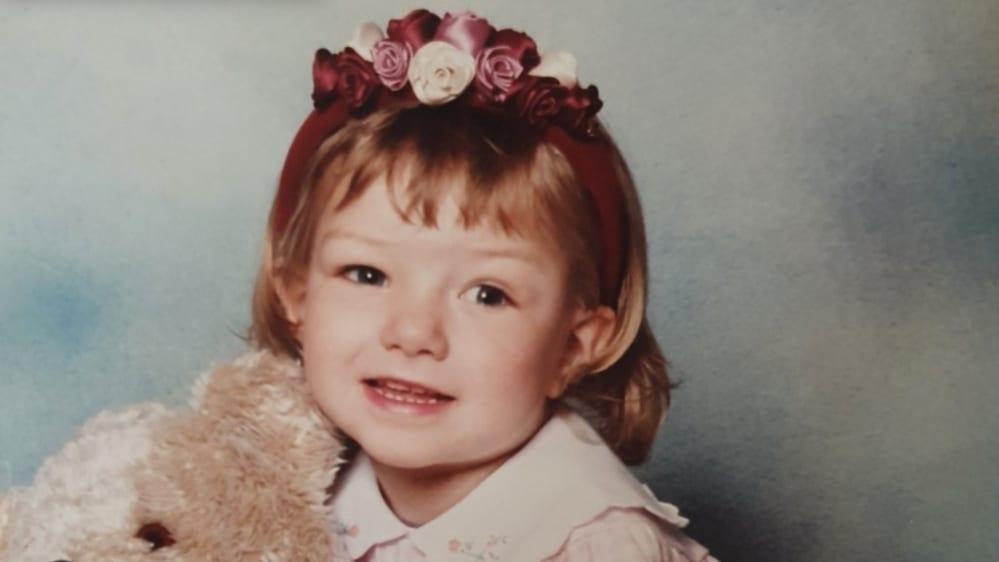
This meant that my 4 and 5-year-old boys were at home with their dad until my mother came from country Western Australia. Without the support of my parents, siblings (Wendy, Kerry and Brett and extended family) I would not have coped.
Very Special Kids was contacted during this time and Kara later became the face of the first VSK palliative care unit in Melbourne. The three volunteers were amazing in providing me with support for four hours, four times a week so that I could go home and do what had to be done.
The community around where I lived were amazing with food drops, babysitting and gifts. I felt very lucky and supported by people I barely knew.
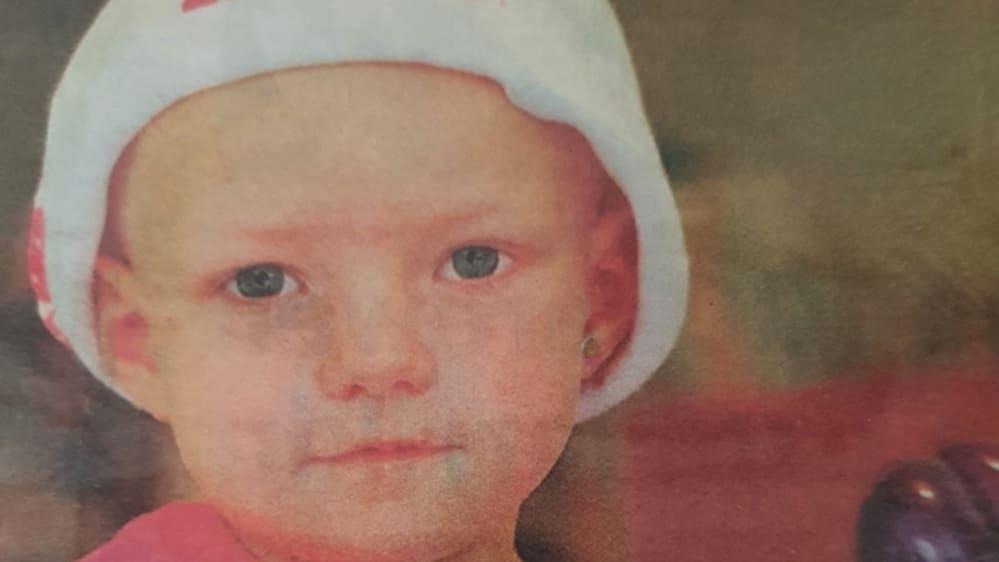
As a registered nurse I was familiar with the cancer treatments which took four months. 12 weeks of aggressive chemotherapy followed by an operation to remove the adrenal tumour and part of the kidney. As Kara vomited six times a day and could not eat, she required nasogastric feeds plus intravenous nutrition.
A month after surgery Kara was prepared for the autologous bone marrow transplant. She was in isolation for ten days until the bone marrow recovered. At this point she developed pneumocystis pneumonia and was ventilation and admitted to ICU.
After seven months of treatment, she was home for five weeks. I was shocked when I was told that it was breast milk that was making her vomit and not the damage to her small bowel from the chemotherapy.
Nursing Mothers Australia were always supportive. Kara’s oncologist was extremely kind and did everything possible. I received support from my amazing husband who was working full time, my wonderful mother when she came for three weeks at a time and the VSK volunteers. They were incredible because I was in the hospital for 20 hours most days and it was exhausting, due to lack of sleep and food and I never left Kara alone. My two boys no doubt suffered, and each day I would bring them into the hospital so they could see Kara until their dad finished work.
Family, who I thought could help, did not want to know about the struggle. Unfortunately, I felt very isolated from other mothers with similar diagnosis who were also struggling with their own situation.
It became a survival exercise and that meant when others were crying the rule was don’t go over, and if you got the pull-out bed first then that was OK. A nun was the only person who let me know that it was ok to feel angry. Various church groups helped by praying, and I was grateful even though I am not religious.
I felt alone at kindergarten pick up and indeed at supermarkets because I felt I was living a nightmare and I struggled with normal friendly conversation like, “have a good day.”
Devastatingly, Kara never had a chance. The failure of her treatment 30 years ago has no doubt helped with treatment protocol today. Yet today children still only have a 50% chance of remission.
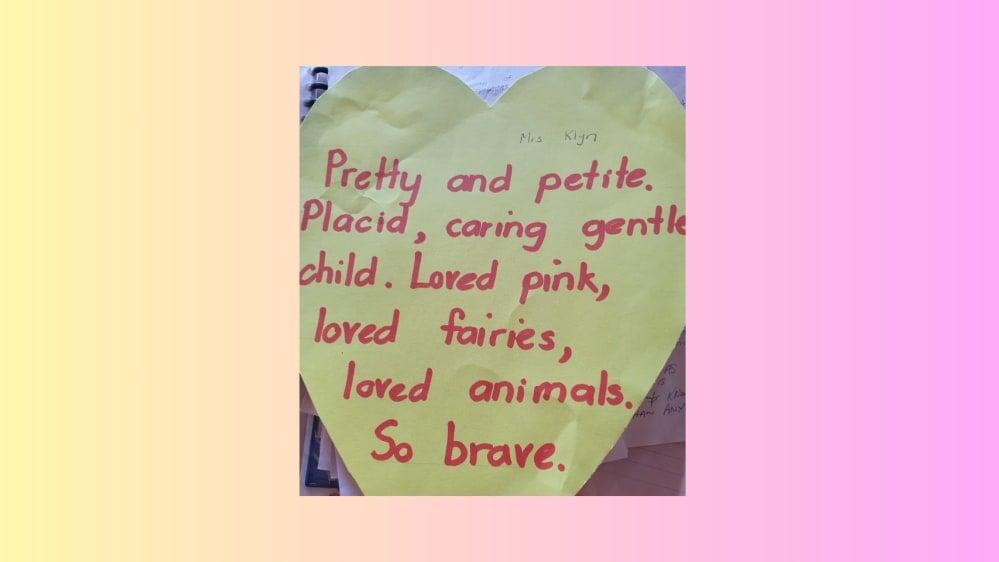
I would have given anything to have Kara alive as a 32-year-old. Her four brothers have grown up knowing they had a sister but not knowing the wonderful and caring person she was. This is happening to other families, and I am asking for help from the community to raise awareness and improve outcomes for these children who are usually less than five years of age.
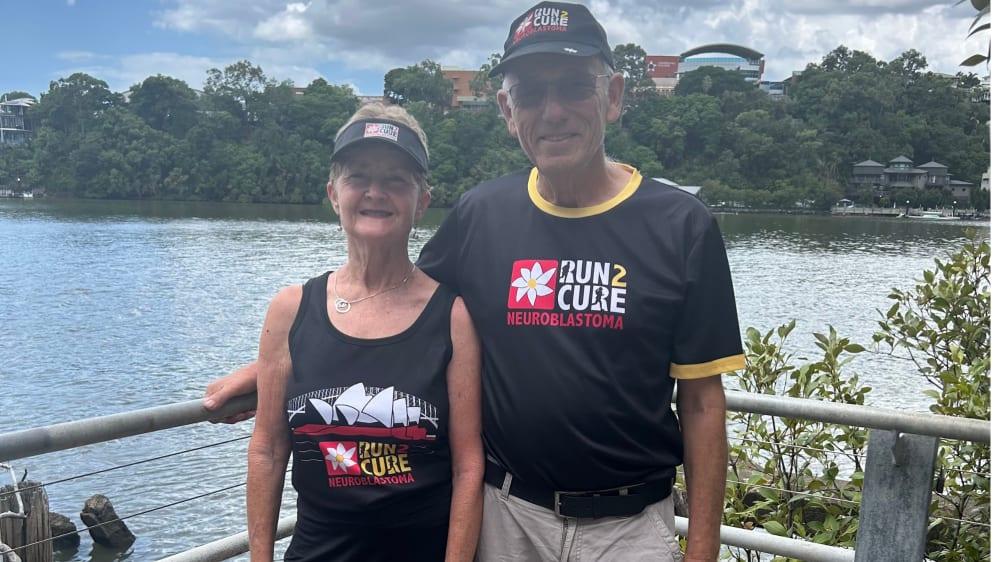
Run2Cure is an incredible journey of sharing with families like ours. It is an opportunity to raise funds to continue to help scientists develop a cure for this terrible cancer.
Since 2010 Neuroblastoma Australia through the energy and dedication of Lucy Jones has raised $3.7 million towards research. New therapies are still required to change survival rates and this means that fundraising is imperative.
Kara Le Rossignol is a superhero.