Little Grace was just 8 months old when her mum noticed changes in Grace’s leg strength and movement. After a hospital visit and an MRI, the family received devastating news: a cancer-like mass had been found in Grace’s chest. Her mum, Brooke, shares their story,
Grace was a happy and healthy 8-month-old baby with no signs of being unwell.
She was meeting all of her milestones however the strength and movement in her legs was slowly decreasing.
After a visit to the GP, we were referred to our paediatrician, who ordered an MRI that same day. The MRI was stopped halfway through. We were taken aside into a consult room and told a cancer-like mass had been found in Grace’s chest that was compressing her spine. My husband and I just looked at each other and cried.
I wasn’t sure if I’d be planning a 1st birthday or a funeral.
We drove to the Queensland Children’s Hospital in Brisbane that night. At 2:30am we were admitted to the oncology ward which was very daunting and terrifying. That afternoon Grace underwent spinal decompression surgery which took six hours. It was the longest six hours of our lives, filled with anxiety and worry.
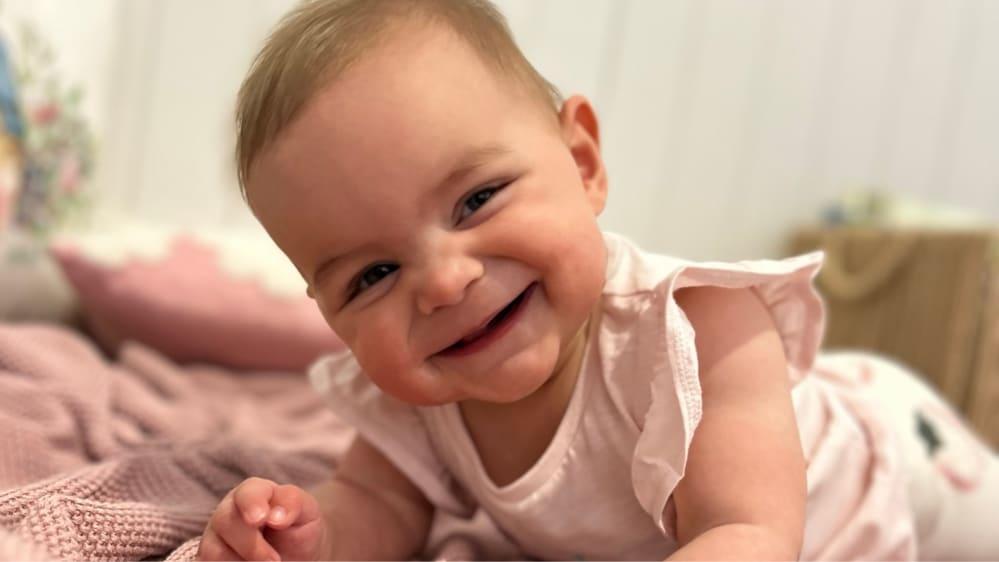
Grace remained in intensive care for two days. We were unable to pick her up and comfort her for four days which utterly broke my heart.
We were told that, due to the spinal compression, it was unlikely that Grace would ever walk. This news absolutely shattered us. We were completely devastated and heartbroken for our baby.
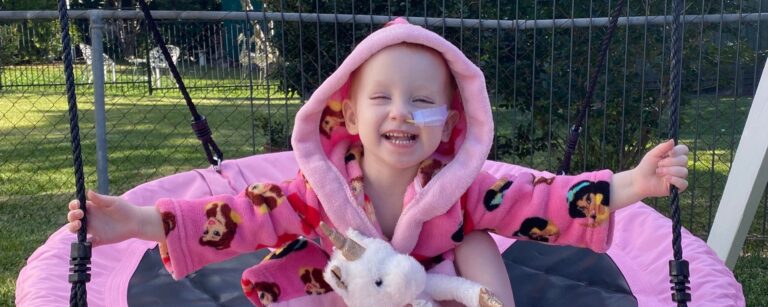
Two weeks later the results of her tumour tests came back, and it was confirmed that Grace had stage 4 intermediate risk neuroblastoma. My husband and I had never heard of neuroblastoma and we were terrified for what the future held for our baby girl. Grace started chemotherapy the following day. Her treatment plan consisted of eight rounds of chemotherapy which she had every three weeks, with the likelihood of surgery to remove the tumour once it had shrunk enough.
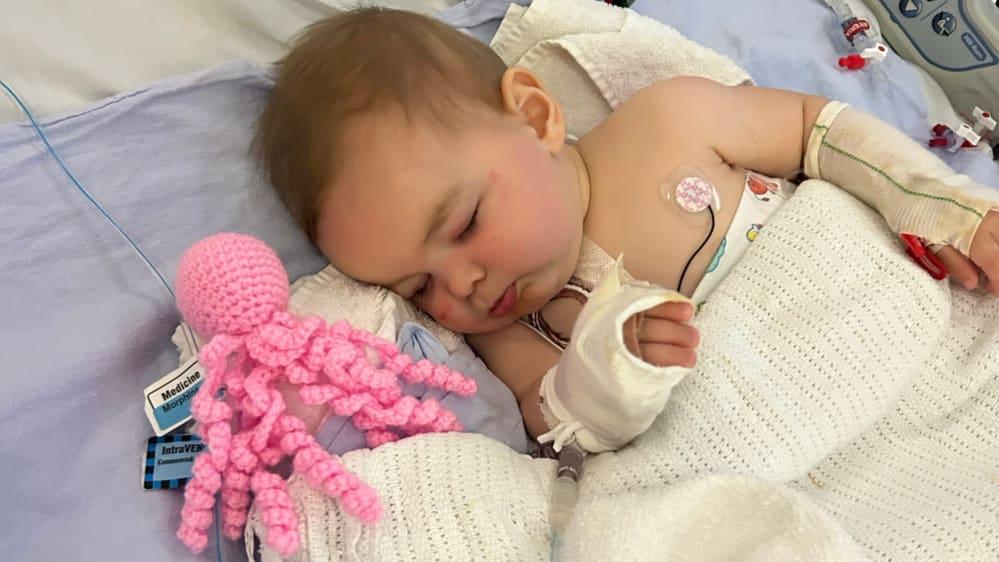
As we live rurally, we had to move to Brisbane for Grace’s treatment which was challenging and at times very isolating. However, we were very fortunate and were able to stay at Childhood Cancer Support which allowed us to focus on Grace and provide us with the warm community and support we needed.
Two weeks later Grace had an MRI to determine if treatment was working. Being so young, Grace has to have a general anaesthetic for her scans.
It felt like an eternity waiting for the results, but we were finally told Grace’s tumour had shrunk by 50% – which was the best news we could have possibly hoped for. We continued the protocol for five more rounds of chemotherapy.
During this time a MRI showed that the tumour was no longer shrinking so surgery was scheduled. Grace completed the final two rounds of chemo to ensure we gave her the best chance of killing the cancer.
Grace underwent surgery to remove the final tumour in her chest which removed around 95% of the tumour. Unfortunately, surgeons hit her thoracic duct in surgery, so she had to return to theatre the following day to have this stitched internally.
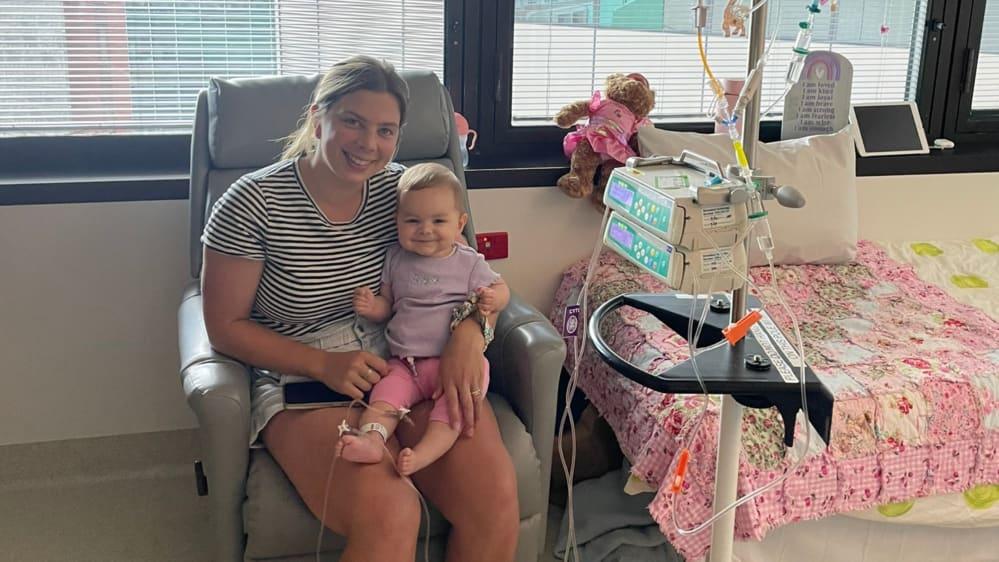
Grace had a chest drain after surgery which came apart, allowing air to make its way into her chest.
They then attached a vacuum to the drain to remove the air; this meant she was attached to the wall for the next few days which was challenging as she regained her energy and wanted to crawl around.
Finally, after eight months of gruelling treatment, we met with our oncologist—and received the news we had been dreaming of: Grace was clear of neuroblastoma. A few weeks later, her central line was removed, and we were finally able to return home. Having been away for so long, it was incredibly emotional to see our little girl back where she belonged, doing the things she loved.
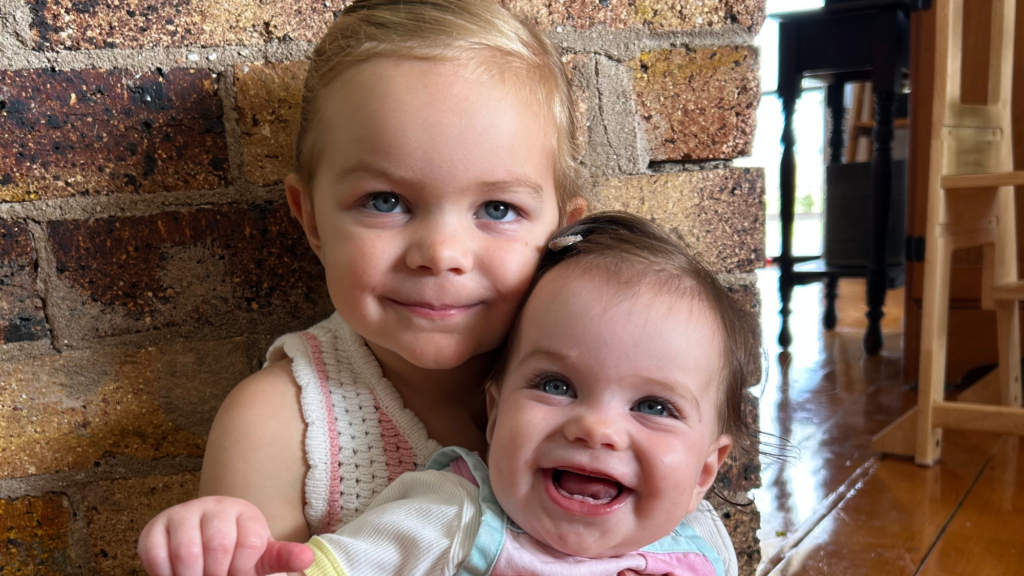
Grace is now going really well.
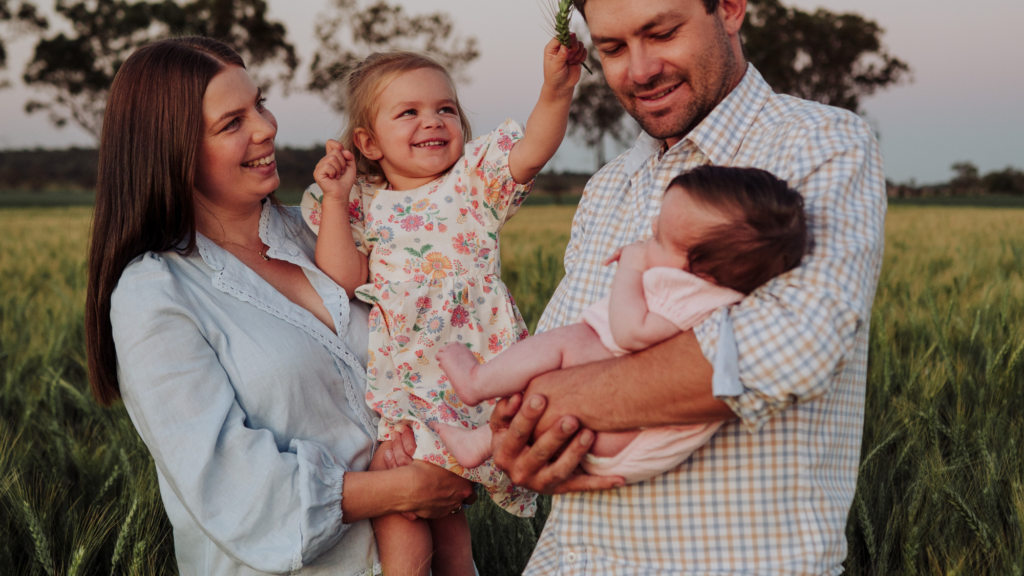
She is three years old, and almost two years in remission. She’s the best big sister to our new baby, Lucy. Grace is caring, considerate, inquisitive, cheeky and brightens all of our days.
She loves running around with her dogs, riding her scooter, and jumping on her trampoline. She loves being outdoors!
We’d never even heard of neuroblastoma before Grace was diagnosed. Now, we know how important it is to fund research—not just to improve treatments, but to give families like ours hope.