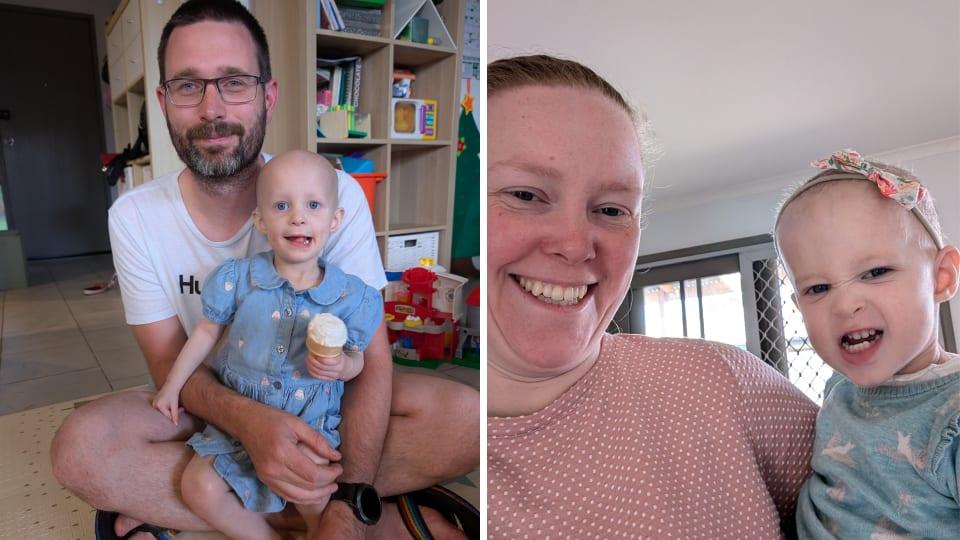
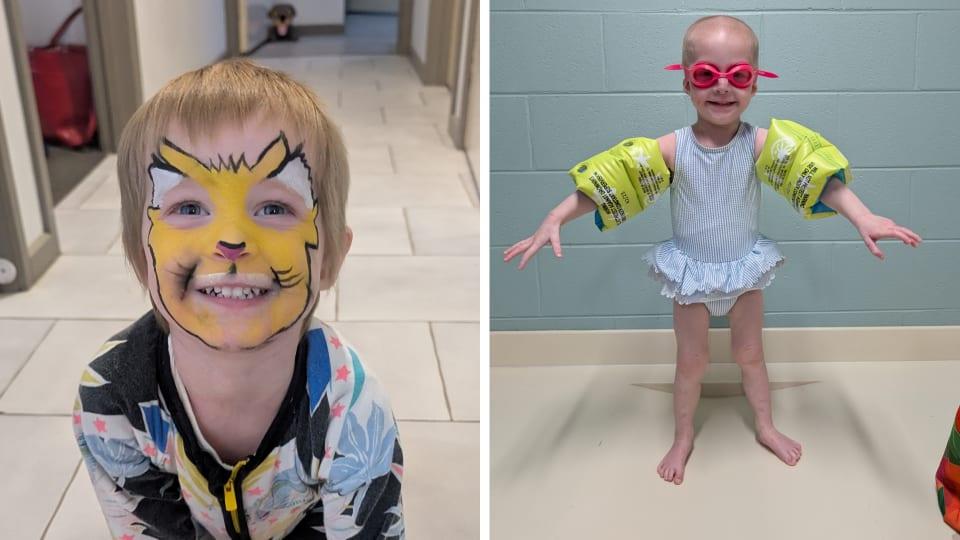
When 19-month-old Emily went to the GP for what seemed like a simple cold, her parents never imagined it would change their lives. Emily’s mum, Jade, shares their story,
Our journey with neuroblastoma began in the most unexpected way. Emily was just 19 months old when we visited a GP for a cold virus. During the visit, the GP—someone we hadn’t seen before—noticed that Emily’s tummy looked a little tight and bloated. While several medical professionals hadn’t thought much of it previously, this GP suggested we get an ultrasound once Emily recovered from her cold.
We booked the ultrasound at Monash Children’s Hospital, thinking it would be easier since they’re great with kids. Midway through the scan, the technician paused and said they needed to consult their supervisor. Minutes later, a senior doctor joined them, and we were told an abnormality had been found. We were immediately escorted down the corridor to the Emergency Department.
What was meant to be a quick morning scan turned into a three-night stay in hospital. Following a chest X-ray, CT scan, and blood work, our world shifted dramatically—we were told it was likely a tumour.
Further scans confirmed it was neuroblastoma, stage 2A. The tumour was approximately the size of an avocado and wrapped around the inferior vena cava.
The diagnosis came as a complete shock. Emily had always been a vibrant, energetic child, and to hear she had cancer was devastating.
She was officially diagnosed in July 2024, and we quickly entered a whirlwind of hospital visits, consultations, and treatment plans. Just prior to surgery, we learned that the tumour didn’t just wrap around one major blood vessel—it was entwined around virtually every major vessel in her abdomen and had shifted her right kidney out of place.
Emily’s treatment involved four rounds of chemotherapy. The first two rounds weren’t as effective as hoped, but rounds three and four used stronger drugs that had a noticeable shrinking effect—though not enough to avoid surgery.
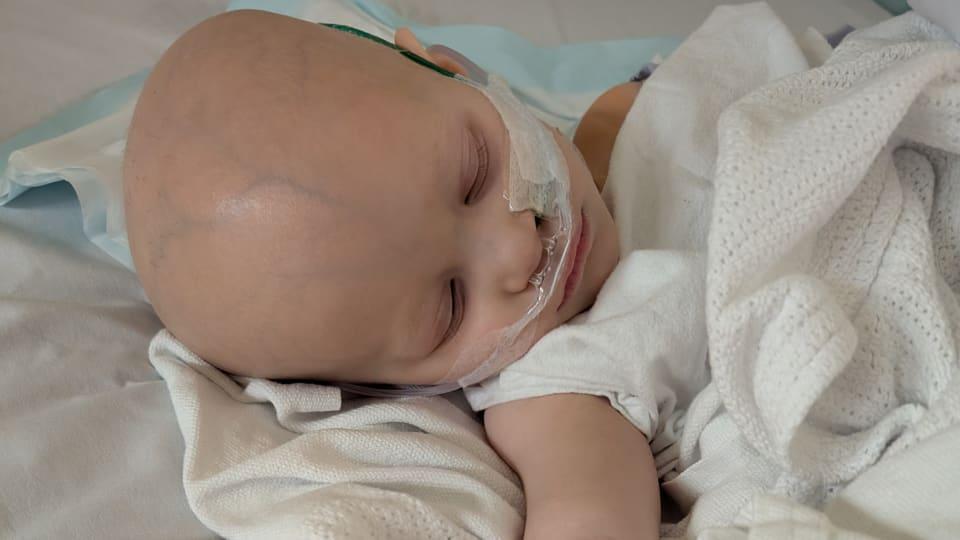
Her surgery to remove the tumour took place at the end of November 2024. It was a long, eight-hour procedure, but it was successful, and we were overjoyed to hear she was in remission.
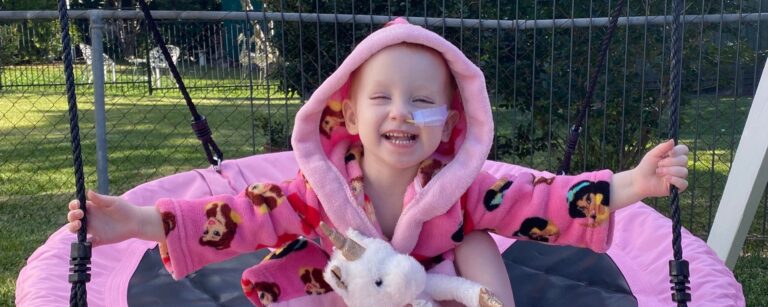
Unfortunately for us, it wasn’t just the experience of hospital treatment that was hard. During this time, we also discovered that Emily was allergic to one of the dressings used to cover her port. Combined with her four existing food allergies, this complicated everything immensely—adding another layer of stress to an already overwhelming situation.
Cancer treatment is hard. Cancer treatment with kids is hard. Toddler life while you’re dealing with cancer treatment is something I couldn’t have even imagined.
The nap requirements, sleep deprivation, and general toddler clumsiness—combined with chemo side effects like low platelets—made every day feel like walking a tightrope. To make matters worse, we contracted COVID while staying in hospital. It felt like everything was pitted against us.
Her first surveillance CT scan post-surgery revealed a small abnormality. After further imaging and discussions with her medical team, it was determined to be a tiny piece of residual tumour, likely missed during surgery. Thankfully, it’s considered low risk and doesn’t require immediate intervention.
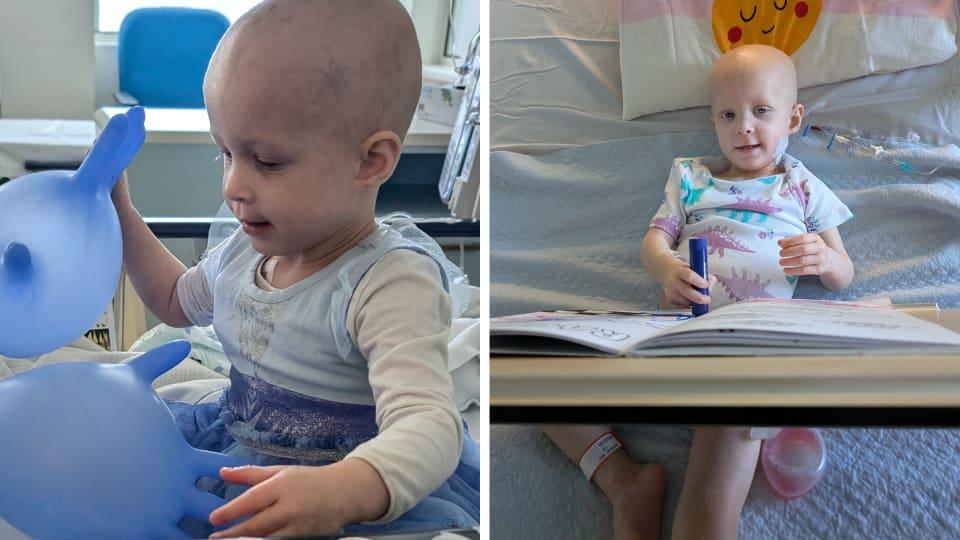
The challenges throughout this journey have been immense—not just physically for Emily, but emotionally for our entire family. The uncertainty, the hospital stays, the fear of relapse—it’s a heavy burden. But through it all, Emily has shown us what true courage looks like. Her strength, humour, and determination have been nothing short of inspiring.
What I want people to know is that neuroblastoma is a cruel and complex disease. While we were fortunate to catch Emily’s early and receive a positive prognosis, many families aren’t as lucky.
The treatments are harsh, and the outcomes can be heartbreaking. That’s why supporting research is so vital. We need better, safer treatments and earlier detection methods. Every dollar raised brings us closer to giving children like Emily—and so many others—a brighter, healthier future.