
Following an in-depth review of 12 high-quality funding applications, our world class Scientific Advisory Board strongly recommended we fund two 2023 research projects that demonstrated exceptional research quality and the potential to make a difference to treatments.
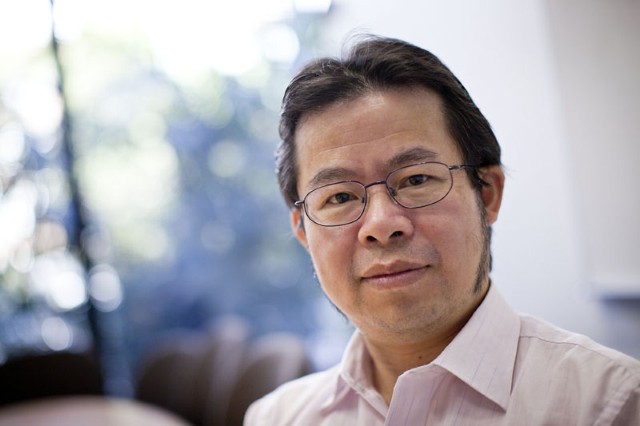
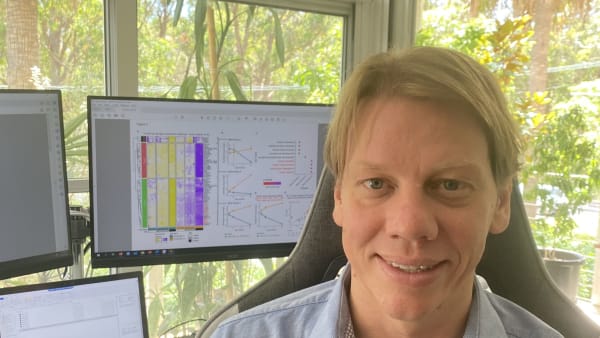
Assoc. Prof Daniel Carter from University of Technology Sydney will study the potential for tailored treatment plans that target the specific genetic profile of individual tumours.
Utilising genetic barcoding to target tumour profiles
A major problem hindering successful therapy in neuroblastoma is that cancer cells of a given tumour have differing genetic profiles, and therefore differing sensitivity to chemotherapy.
Treatments fail in neuroblastoma because minor cancer cell populations are naturally drug resistant due to their unique genetic makeup, and these cells ultimately regrow as a highly drug-resistant ‘relapsed’ tumour. To identify key genetic features that allow resistance to chemotherapy, Assoc. Prof. Carter and his team will use novel genetic barcoding technology that allows them to track individual tumour cells when the cells are exposed to anti-cancer drugs in the lab.
They will undertake a drug screen which will assess how tens of thousands of neuroblastoma cells respond to hundreds of different anticancer drugs using this technology. Using the unique cellular responses for each drug, Assoc. Prof. Carter will then be able to customise optimal drug cocktails that are individualised for each tumour.
Assoc. Prof. Carter’s plan is to ultimately apply these findings as a novel single-cell diagnostic method that allows for better prediction of patient response to chemotherapy and optimised drug treatment approaches individualised for each patient.
Achieving our Mission
Assoc. Prof. Daniel Carter’s project is aligned with Neuroblastoma Australia’s mission to develop safer and more effective treatments for children with neuroblastoma. By developing tailored treatment plans, Assoc. Prof. Carter hopes to improve the experiences and outcomes of neuroblastoma treatments,
I believe that with this approach, we will be able to understand the complex reasons why cancer cells can escape existing therapies. With this new information, we aim to design potent new anti-cancer therapies that improve survival as well as quality of life for kids with cancer. Assoc.
Project Update 2025
Associate Professor Daniel Carter has made good progress with his research into the use of single cell technology to direct the choice of treatment therapy in advanced neuroblastoma.
Assoc. Prof. Carter and his team have discovered that children with neuroblastoma can have a differing response to treatment at the transcriptome level, which highlights the importance of single-cell profiling in personalised medicine.
The data collected to date also reveal the context-dependency of treatment response, which is far greater than the team anticipated.
As Assoc. Prof. Carter explains, “Our experiments demonstrate that drug responses are complex and that cell barcoding is a useful method to not only explore clonal architecture in neuroblastoma cells but to understand the paths that cells take to resist treatment.”
Moving forward, the team will progress their research by using expanded cell barcoding, clinical profiling, and matched patient outcome data to develop single-cell profiling as a tool for therapy selection. In the future, they hope to include this technology as a personalised medicine tool in the Zero Childhood Cancer Program.
We look forward to following this important research as it moves toward the clinic.
Donate to Fund Research
You can help fund groundbreaking research projects to find new, better treatments for children diagnosed neuroblastoma. Please donate today. If you want to help us support research, regular giving provides constant support, even $10 a month makes a difference.